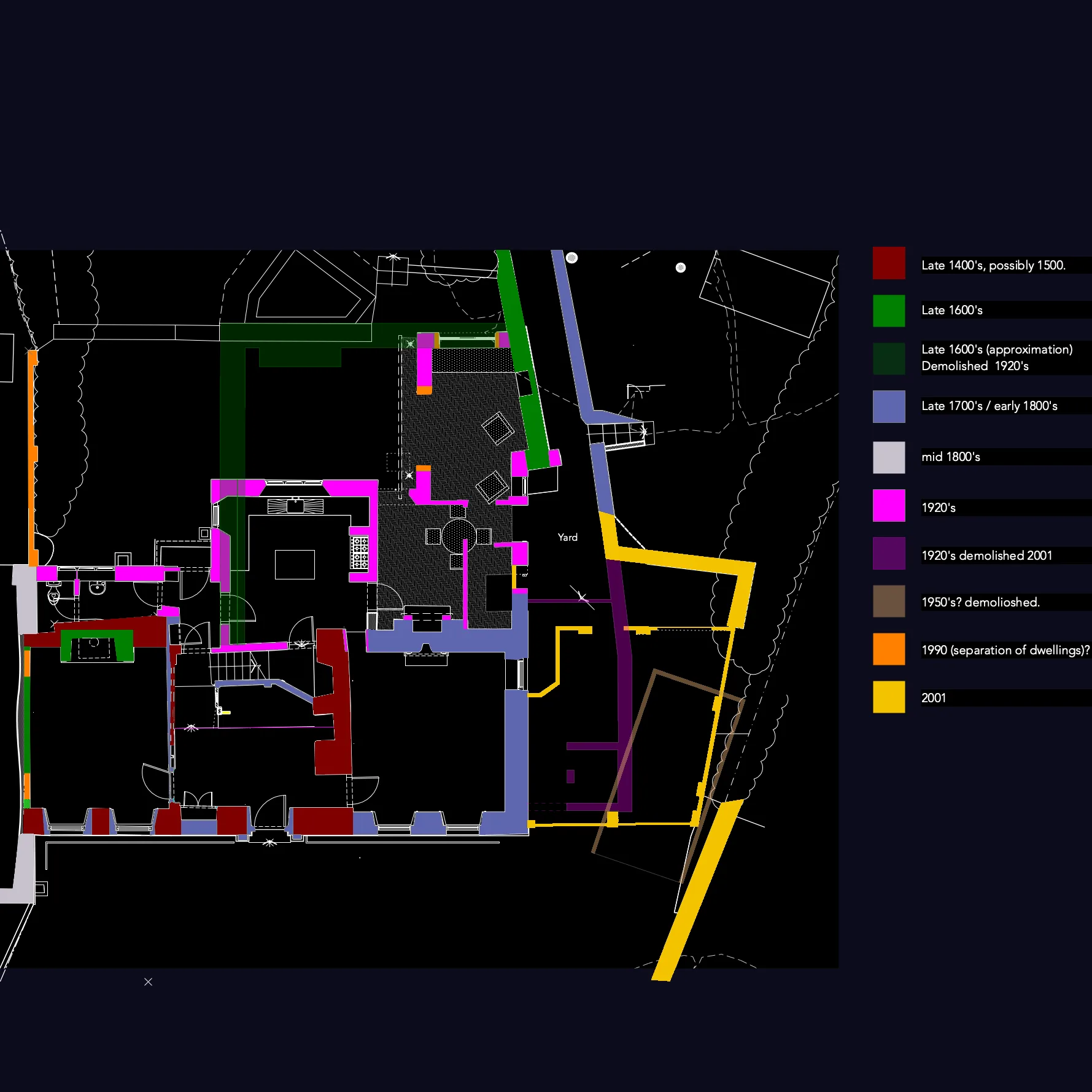
When planning to upgrade, modify or repair a listed or historic building, research is not simply an academic exercise. It is often a fundamental part of securing the permissions needed to carry out the work. Local authorities and conservation officers require a clear understanding of a building’s history and significance before they can assess how proposed changes might affect it. Early stage architectural research provides that essential foundation.
Historic buildings are valued not only because they are old, but because of the story they tell. Over time they have evolved, adapted and been altered to suit changing owners and uses. To make informed and sensitive decisions about their future, we first need to understand that journey. Research helps establish when a building was constructed, who designed and built it, how it has developed, who occupied it and how it was used. All of this contributes to assessing its significance, in other words identifying which elements are particularly important and why.
Not every part of a historic building carries the same level of significance. Some features may be original or rare survivals, while others may be later alterations of lesser heritage value. Understanding this distinction is crucial when planning works. The level of research required will vary depending on the building and the scope of the proposed changes. In some cases a basic assessment is sufficient. In others, particularly where a building is highly significant or the works are substantial, more detailed investigation is necessary. The findings are usually brought together in a Heritage Statement or Statement of Significance, allowing decision makers to properly understand the building and assess the impact of the proposals.
Research typically begins with documentary sources. If a building is listed, The National Heritage List for England provides a useful starting point. However, listing descriptions are often brief and not fully comprehensive. Further information may be found in historic maps, deeds, estate records, old photographs, trade directories, census returns, architectural drawings and previous planning applications. Local archives and record offices can reveal valuable details about ownership, alterations and historical context.
Equally important is the physical investigation of the building itself. The fabric of a historic structure often provides the richest evidence of its past. Careful inspection can reveal blocked up windows and doors, changes in brickwork or masonry, alterations in roof structures and structural scars from removed walls or extensions. Variations in materials and construction techniques help to identify different phases of development. The manner in which timber has been cut, the form of a roof, the style of a chimney or the type of window can all point to particular periods.
Subtle features can also offer clues to former uses. Ceiling hooks might suggest food storage or agricultural activity. Smoke blackening may indicate an open hearth. Wells, drainage features or unusually robust floors can hint at domestic, industrial or farming functions. Decorative plasterwork, generous ceiling heights or finely finished timber can reflect status and prosperity. Even the steepness of a roof can provide insight into original roofing materials. Understanding the building’s surroundings, including neighbouring structures and the wider landscape, adds further context.
In some instances, more advanced techniques are used to answer specific questions. Dendrochronology can date timber by analysing tree rings. Paint analysis may uncover earlier decorative schemes. Laser scanning and photogrammetry can accurately record complex structures. These methods are generally reserved for particularly significant buildings or where unusual features require closer examination.
While architectural research is often essential for obtaining approval, it offers much more than regulatory compliance. It frequently reveals fascinating details that are not immediately apparent, uncovering forgotten alterations, lost architectural features or evidence of how people once lived and worked within the building. This deeper understanding enables better, more informed decisions and ensures that proposed works are proportionate and sensitive.
Ultimately, research is about understanding what truly matters before making change. It ensures that historic buildings can continue to evolve and function in the present while retaining the qualities that make them special. For that reason, it is important that this work is undertaken by someone experienced in historic buildings, who understands what to look for and how to interpret the evidence. Done properly, architectural research does not stand in the way of progress. It guides it responsibly.
Why Architectural Research Matters Before Altering a Historic Building