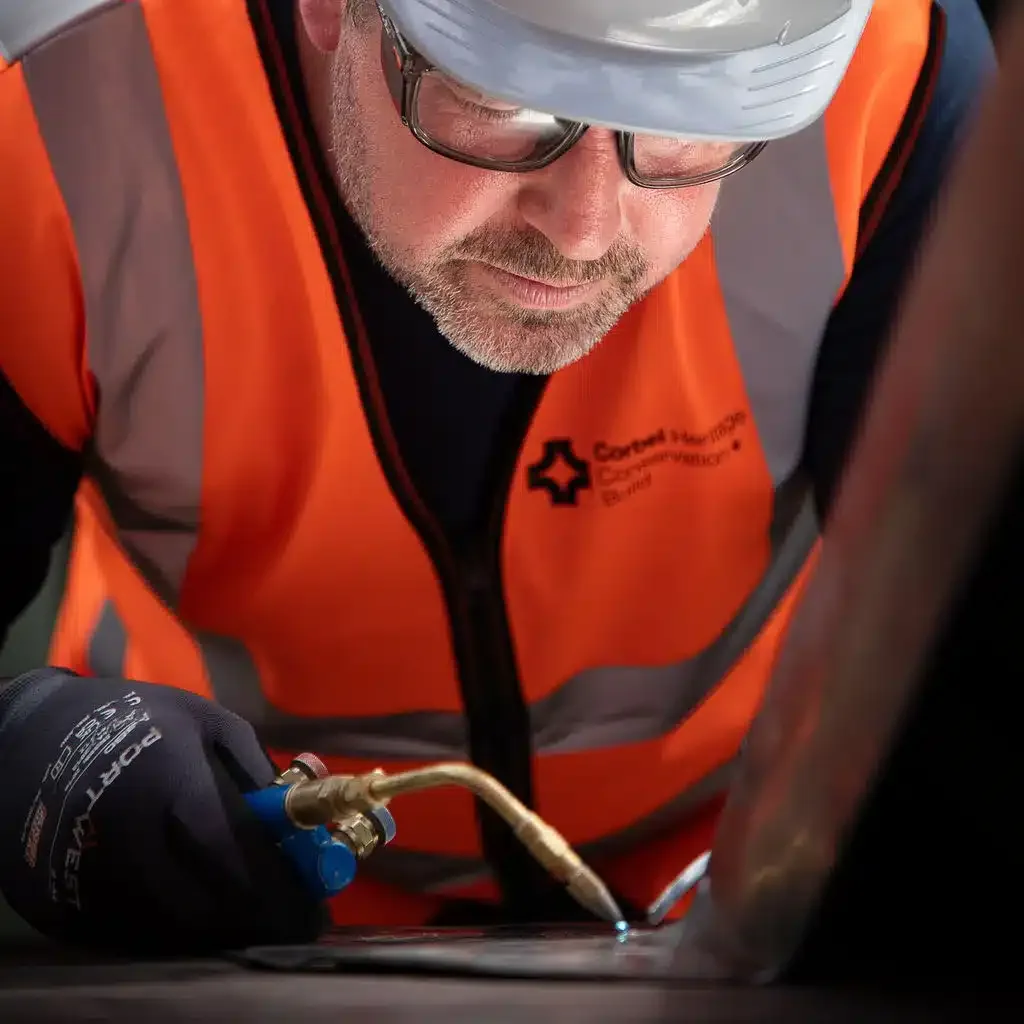
Finding a builder or tradesperson is rarely difficult. Finding someone with the knowledge and experience to work appropriately on a historic building can be considerably more challenging.
Whether you’re undertaking a substantial refurbishment of a listed country house, extending a period property or repairing an important historic structure, the quality of the people involved will have a significant influence on the outcome.
Traditional buildings were constructed using materials and techniques that can differ considerably from modern construction. Working with them requires more than good general building skills. It requires an understanding of how the building was constructed, how its materials behave and what the consequences of an inappropriate intervention might be.
At Corbel, we know that identifying the right skills needs to form part of the early planning and design process, rather than being left until construction is about to begin.
Why do historic buildings require specialist tradespeople?
Historic buildings often contain a combination of materials, construction methods and alterations introduced over many generations.
Traditional timber framing, lime mortars, solid masonry, leadwork and historic plaster finishes all require particular knowledge and experience.
A skilled tradesperson may be extremely capable within modern construction but have limited experience of working with these materials.
For example, a mason accustomed to modern blockwork and cement mortars will not necessarily understand the considerations involved in repairing historic stonework using lime. Similarly, a carpenter experienced in contemporary timber construction may have little experience of repairing a medieval roof structure while retaining as much original material as possible.
This doesn’t mean modern construction skills have no place in historic buildings. Most substantial projects require a combination of traditional and contemporary expertise.
The important thing is understanding where each is appropriate and ensuring the work is undertaken by people with the necessary experience.
Where can you find experienced conservation tradespeople?
There are several established organisations and professional networks that can provide a useful starting point.
The Society for the Protection of Ancient Buildings (SPAB) offers guidance on traditional building repair and information about specialist craftspeople and professionals.
The Building Conservation Directory is another useful resource, bringing together contractors, consultants and specialists working within the historic building sector.
Recommendations from experienced conservation architects, surveyors and established specialist contractors can also be particularly valuable.
However, inclusion in a directory or membership of a professional organisation shouldn’t automatically be taken as evidence that someone is suitable for a particular project.
We would always recommend establishing what relevant work a specialist has actually undertaken.
Have they worked on buildings of a similar age and construction? Do they understand the materials involved? Can they explain why they are proposing a particular method of repair?
The answers to these questions are often more useful than a general assurance that someone has experience of listed buildings.
How do you know whether a tradesperson has the right experience?
There is a considerable difference between having worked on a listed property and having developed a thorough understanding of traditional construction.
An experienced conservation tradesperson should be able to explain their proposed approach, the materials they intend to use and how their work will interact with the existing building.
They should also recognise when further investigation or specialist advice is necessary.
Historic buildings rarely reveal everything before work begins. Concealed defects, previous alterations and unexpected construction details can all require the original approach to be reconsidered.
In our experience, some of the most valuable people on a conservation project are those who recognise when something isn’t quite as expected and are prepared to question the proposed solution before proceeding.
Knowing when to stop, investigate and seek advice is an important skill in itself.
We would also encourage clients to look at completed projects and, where possible, speak to previous clients or the professionals responsible for overseeing the work.
The quality of the finished work matters, but so does the approach taken to achieve it.
Why traditional materials and techniques matter
Many of the problems we encounter in historic buildings are associated with previous repairs undertaken using materials that were incompatible with the original construction.
Cement-rich mortars, impermeable coatings and inappropriate replacement materials can interfere with the way traditional buildings manage moisture or accommodate movement.
The consequences are not always immediately apparent. Deterioration can develop over many years, sometimes affecting historic fabric that had previously remained in good condition for centuries.
This is why conservation work shouldn’t be judged simply on how it looks when completed.
A neatly finished repair isn’t necessarily a successful repair if the materials or methods used are inappropriate.
Equally, using traditional materials doesn’t automatically guarantee a good result. The materials must be correctly specified, prepared and applied by people who understand their characteristics.
The objective should be to retain as much significant historic fabric as reasonably possible and undertake repairs that are compatible with the existing building and capable of performing well over the long term.
Why specialist knowledge should influence architectural design
One of the lessons we’ve learned through working on historic buildings is that design and construction cannot always be treated as entirely separate activities.
Architectural proposals are sometimes developed around assumptions about the condition of an existing structure, how it can be repaired or how new construction might connect to it.
Early input from experienced conservation tradespeople can help establish whether those assumptions are realistic.
For example, understanding the condition and repairability of historic timberwork before developing a design for its replacement can have a considerable influence on the eventual proposals and cost.
The same applies to masonry repairs, traditional plasterwork, roofing and specialist joinery.
At Corbel Architects, our design work benefits from the wider experience of Corbel Conservation and Corbel Joinery. This provides access to practical knowledge of traditional materials, construction techniques and the challenges involved in working with historic fabric.
We believe this understanding is particularly valuable during the early design stages, when decisions can still be influenced without significant disruption or additional cost.
It doesn’t remove every uncertainty associated with historic buildings, but it allows proposals to be developed with a clearer understanding of how the work might actually be undertaken.
The importance of experience and good judgement
Traditional building skills are often associated with craftsmanship, and rightly so. The quality of work undertaken by experienced conservation tradespeople can be exceptional.
However, we believe the judgement applied to the work is equally important.
Knowing when to repair rather than replace, when an irregularity is part of the building’s character rather than a defect, or when an unexpected condition requires further investigation can make a considerable difference to the outcome.
The wider Corbel team’s work at Tickenham Court, involving sensitive carpentry, masonry and re-roofing works to the medieval hall and solar, provides an example of the specialist understanding required when working with historic structures.
Buildings of this age demand particular care. Repairs to historic timberwork, masonry and roof structures need to consider not only the condition of individual elements, but also their relationship with the wider building and the importance of retaining original fabric.
The work requires an understanding of traditional craftsmanship, how historic structures behave and the potential consequences of interventions elsewhere in the building.
This practical experience is valuable to our architectural work, helping us recognise where specialist knowledge is needed and how it can influence the development of an appropriate design.
Finding the right people is only part of the challenge
For a substantial historic building project, identifying experienced craftspeople is only one part of the process.
The work may involve conservation carpenters, stonemasons, traditional plasterers, roofers, leadworkers and specialist joiners, alongside structural engineers and modern building services contractors.
The different elements of work are often closely connected.
A structural repair may need to be completed before roofing can proceed. Masonry repairs may influence how adjoining timberwork is supported. Temporary works, access arrangements and the protection of historic fabric may all affect how the project is undertaken.
Even where individual tradespeople are highly skilled, the project still requires careful coordination.
For relatively straightforward repairs, appointing an individual specialist may be entirely appropriate. However, more substantial alterations, extensions and refurbishments will often benefit from the involvement of an experienced conservation main contractor capable of managing the different trades and taking responsibility for the overall delivery.
This is another reason why we believe construction knowledge should inform architectural design from the outset.
Understanding how the proposed works will be undertaken, what specialist skills are required and how different elements interact can help establish a more realistic design, programme and budget.
Bringing the right skills together
For anyone considering significant work to a historic property, our advice would be to think about the people and skills required as part of the initial project planning.
The right approach will depend on the building, its condition, its historic significance and the nature of the proposed works.
An experienced conservation architect should be able to help identify the specialist knowledge required, recognise where further investigation is necessary and develop proposals that take account of the practical realities of construction.
At Corbel Architects, our approach is informed by the wider experience of Corbel Conservation and Corbel Joinery. This brings together architectural design, traditional construction knowledge and an understanding of the practical challenges associated with historic buildings.
Ultimately, successful conservation is not simply about finding someone who can carry out a particular repair. It is about understanding what the building needs, recognising the significance of what is already there and ensuring that the right decisions are made before work begins.
If you’re considering an extension, alteration or substantial refurbishment of a listed or historic property, Corbel Architects can help you understand the opportunities, identify the challenges and develop an appropriate approach from the outset.